Sunday, June 03, 2012
Changes
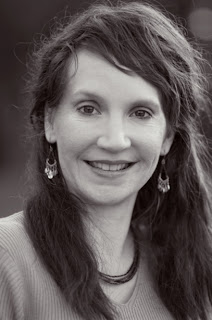
Dear readers (if there are any), I got married in 2011 and my new name is Anne Shepard.
I just (finally) started a new blog at storiesnewswonders.blogspot.com.
Tuesday, August 25, 2009
Health Care: Why I Want Reform
 I grew up in one of those "middle of the road" states politically--in a family that votes both Republican and Democrat. My father's more of an Independent than anything, and my mother leans right. Growing up, I knew more about the right side of the aisle (just slightly) than I did the left.
The issue that shaped my political views most? Health care.
At 20, I took a summer job teaching summer school and Vacation Bible School in the Atlanta area. It was my first "big city" experience, and it's about when I started to realize how wide the gap between rich and poor--and, specifically, the gap between those who have health care and those who don't--could be.
While I was in Atlanta, my team partner, Shirley, developed a serious medical condition that required attention. The catch? She didn't have health insurance. Yes, at 20, she was in one of those groups that those who oppose health care reform may tell you shouldn't be counted as uninsured. From the way some talk, you'd think that anyone under 35 never has a health issue.
Of course, we know that's not true, and I believe every one of the more than 46 million Americans without health insurance needs to be counted.
Without health insurance, Shirley had one option to deal with significant pain: the emergency room. She and I were staying with a host family that dropped us off at an Atlanta hospital--they were too nervous about the neighborhood to stay with us, so they told us to call after Shirley got seen--and, once Shirley got registered, the waiting began. We waited a long time.
After awhile, Shirley got called to the second waiting room and, since I wasn't a patient, I waited in the outer room. All around me, people were coughing. People were bleeding. Patients on cots waited next to doors that seemed never to open. Some moaned. Most were quiet. I looked around, and it's not exaggerating to say I was shocked. I was disgusted. I think it's safe to say this: I was changed.
In Iowa, where I'd had health insurance all my life by virtue of my father's job, things were just different. Or maybe my life was different. I realized there were a lot of ways of living--a lot of situations--I'd never seen before. I realized that the gap between those who have good care and those who don't isn't small--it's huge.
Later, my own experiences confirmed what I learned that day: health care in America is broken. As a teacher in Queens, I had health insurance--an HMO. I lived in a working class neighborhood on a very low salary (try living in New York City in the 90's on $20,000 a year). Although I had better care than the uninsured, it wasn't superb by any stretch. Waiting rooms were not pretty places. Waits themselves were long. Doctors were not always top-notch. Yes, care was rationed: by income.
Later, I had health care connected with a job in Prince George's County, Maryland, and, again, I had HMO coverage, though for much of my tenure at the job, I had to pay about $400/month for it. The doctor's office I went to in Hyattsville, the office of Dr. Richard Lilly, had unquestionably the longest waits (often two hours and almost always one) I have ever experienced--and some of the most incompetent administrators.
I had pneumonia while I lived there. Though it was diagnosed right away and I was told to make a follow-up appointment as soon as the X-ray results came back, the office couldn't get me in to the same doctor who made the diagnosis. I had to see another doctor in a satellite office. After dragging myself out to the satellite office, I trusted that they would have had my records transferred--after all, the management was the same.
Instead, when I arrived, the doctor asked me, "Why are you here?" I told Doctor #2 that I had pneumonia and said that the other office, the main office, had already diagnosed me via X-ray. I suggested that she call that office to get my records. She declined. She couldn't even bother to make a phone call. After some arguing, she gave me a weak antibiotic that didn't work. A week later, I had to get another one.
What if I had been in less hearty overall health (sans pneumonia)? Though I know doctors are human and make mistakes, incompetent administrators and a lazy physician were factors in this case. That incompetence and poor care cost me a week of health--it could have cost much more. Was it because the office was in a low-income, mostly minority community? Is that why they could survive though they treated patients poorly--there were just few options for people in the area? I have to wonder.
As a small business owner, I tried to get health insurance that would be better than COBRA, which was running out and cost $400/month with no prescription coverage. I failed and was rejected because I have been treated for mild rosacea and had a shoulder injury along with outpatient counseling after a divorce a few years ago. I have never missed a day of work for any of these conditions, yet I was rejected. Fortunately, in my state, Maryland, a state health insurance program is available, and I qualified for that. What if there had been no such safety net?
What is it like to be uninsured? I know that, too. Briefly, I was uninsured when I was in my 20's--and I had a bicycle accident. I soon found out that no one could tell me how much an X-ray would cost, and I had to guess what care I could afford and ration my own care based on income available. While I was healing, I borrowed a sling from a friend. It didn't fit, but I just made the best of it.
I now have health care through a job, and that's great. But I know what it's like not to have that, or to have poor care. I understand the argument that government health care might lead to lower wages for doctors, but I have to say that I am much more concerned about the millions of people whose only recourse is the emergency room--something taxpayers pick up the bill for, anyway. It sickens me that the debate devolves into name-calling, lies, and exaggerations when so much is at stake.
Though I'm all for examining options carefully, I don't think shouting helps anyone. Though I value debate, I don't think lies about "death panels" or dangerous allegations that President Obama is a "Nazi" help anyone (plus, the latter makes light of something we should never take lightly).
Taxpayers already pay for the uninsured. Care is already rationed. Running health care as a purely market-driven business doesn't work.
So now you know: I'm in favor of health care reform.
Monday, August 24, 2009

Friday, August 07, 2009
True Confession from the Land of the Nerds
 I've thought often of blog posts I might write, but they just haven't written themselves. Some topics I've considered and even started to write about in my head include the following:
1. Michael Jackson's Death: Why (I'm Ashamed to Say) I Cried
2. Health Care Reform: Why We Need It
3. Homesteading in Wisconsin: Getting My Klemp On
Needless to say, these are very diverse topics, but I've finally decided on yet another topic for this post, with apologies for my long absence. In fairness, work has just been really busy lately, for which I am very grateful.
So, how did I come up with the topic I've finally chosen?
I've been reading a book loaned to me. It's called The Girls from Ames, and it's about women who grew up together in Ames, Iowa and maintained their friendships into adulthood. As you may know if you saw my earlier post on pigs, I grew up in Iowa, too. So, my friend correctly figured I'd like to read The Girls from Ames.
As I've been reading, though, I learned something that I'm sure my friend didn't intend: I was a nerd. I might still be one. I'm not sure.
In the book, the author talks about parties the girls went to, drinking games they played, boys they flirted with. For the most part, that pretty much went on without my knowledge. I most definitely was interested in boys--I just couldn't figure out how to talk to them, and I was convinced I was so ugly I shouldn't. I wasn't a wannabe--I truly had no clue. Really!
NOTE: WHAT I WRITE NEXT IS NOT BRAGGING. IT IS HOW IT WAS. IT'S (SLIGHTLY) TRAGIC IN A VERY COMEDIC SORT OF WAY.
I think it all started when I was a kid. I learned to read before I went to school. The first thing I read was the JCPenney sign, my parents tell me. Apparently, though they thought at first I was just recognizing the shapes, I could read it even when it looked different in different towns--different colors and so on.
I didn't intend to learn to read, but I'm sure having two reading parents and being an only child for the first almost-four years of my life had something to do with it.
Anyway, by the time I got to kindergarten, I could read fluently. They had me read a book to the first graders (nerd alert: danger already presenting itself here). In first grade, I read with the second graders. In second grade, I read with the third graders, but I soon passed them up and ended up having my own reading program. I couldn't help it. I was also a great speller (I see this as an inborn ability having to do with "seeing" words in your head, not an indicator of intelligence).
So, the kicker is this: I was in a spelling bee. I was in second grade, up reading with the third graders who knew I'd already passed them up. Even though I basically had the self-esteem of a turnip, they might have wanted to see me get something wrong just because I usually didn't. I got up to spell and, as it turns out, the word I was given to spell was NERD.
Picture me: I've never heard that word. It doesn't exist in my family! The sad thing is, I didn't know it applied to me! So I spelled it n-u-r-d, and I lost the spelling bee.
When I look back, I am amazed at how clueless I was. I honestly envied the popular kids sometimes (through high school, too), but I can just as honestly say I didn't want to be one of them. I just knew it was, well, beyond me. I mean, I also wore my mother's green pointed sneakers with a pink shirt to school as well as purple pants and red, white, and blue sneakers another time.
I think we all know that academic excellence doesn't always or often equal increased social standing. As a good friend puts it, "If being a National Merit Finalist is so important, why am I still doing my own laundry?"
That's what I've learned this week. Wonder what to do with that?
I think it was nerdy to write this.
Especially on a Friday night.
Monday, April 27, 2009
BLAST Marketing

I've been on LinkedIn for a couple of years now, and one of the best features I use is the "testimonials" feature. LinkedIn creates an easy way to get and show testimonials, something that I find to be of use when searching for a service.
When I first meet with a prospective client, I often find them on LinkedIn before or shortly after our first meeting---then I connect with them and give them a way to see the quality of my work without bombarding them with samples. Works for me!
Saturday, February 21, 2009
Strange Fiction
 Ever heard of NANOWRIMO? It's also known as National Novel Writing Month--in which writers try to complete an ENTIRE novel in one month.
A few years ago, I made it to 40 pages. It was totally stream of consciousness writing, and what came out was, well, probably not publishable. I can tell it was heavily influenced by fiction like Hitchhikers Guide to the Galaxy by Douglas Adams--though not a copy. Just in that vein of very strange fiction.
Here's the first minichapter of the mininovel:
Finky knew that standing on the roof-edge of a twenty-story building with his hands tied behind his back was not in his job description. But here he was, anyway.
He stared in front of him, wishing for a broom or King Kong or a huge bat (much as he hated the idea of a huge flying rodent). None of these appeared.
“Your time is up, buddy,” said the little orange man behind him. “Sayonara!”
“Japanese,” thought Finky. “He would have to use that at a time like this.”
He didn’t have much time to think about that, though, because the orange man pushed him hard, and he toppled off the building’s edge, giving a quick nod to the thirty-story building across the street.
A bird flew by, and Finky wondered how he could notice that at a time like this. Instead of his life passing before his eyes, it was a sparrow. “That figures,” he said to himself, thinking those were the lamest last words ever. He tried to think of something profound to say, something people could remember him by when he smashed into them on the sidewalk, but nothing came to mind. Until---“Yes,” he thought. “It’s good to start in the middle.”
He wasn’t sure what that had to do with anything, but this time he had more time to think, because he landed in a truck full of cotton balls that was speeding by.
“Cotton,” thought Finky. “The other white meat.”
He promptly passed out. It had been a long day, and, as it turned out, it was only half over.
Thursday, February 05, 2009
Shocking Statistic
 All seriousness aside, this is an illustration I created for a speech I gave yesterday.
According to 2008 statistics garnered from the U.S. Census Bureau and the USDA, there are more than six pigs for every person in the state of Iowa, my home state.
The state in which I now live, Maryland, is fifth in population density (it's five or six times smaller than Iowa but has 2.5 million more people), while Iowa is 35th.
It made for a good speech opener at Rotary and Toastmasters, I think. No deep meanings or criticisms intended--just interesting facts.
Sunday, October 19, 2008
Single-Issue Voters?

Politics can be tough, and it certainly is now.
There are many opinions yet to be read, many speeches yet to be heard, and a final outcome yet to be determined. At this point, I guess you'd say the gloves come off. Attack ads? We've got them. Gimmicks? They're readily apparent.
A statement I read in the local paper still sticks with me: "I'm a Christian, so I vote Republican," the author wrote in a note to the editor.
To me, that makes as much sense as saying, "I grew up in Iowa. Therefore, I lived on a farm."
That's, purely and simply, faulty reasoning and fractured logic. A doesn't follow from B.
There are a lot of issues that have to do with life, issues that matter in education, health care, the economy. To me, to look at just one issue in this election ignores the proverbial forest for one tree.
By all means, I respect everyone's right to vote according to his or her conscience. I believe that praying about the election is good thing. And I value everyone's right to make a decision based on the priorities he or she values.
I'm just hoping we all consider that there is more than one priority, more than one issue at stake--and that we avoid judgment about the decisions of others.
And, by the way, I grew up in Iowa, but I never lived on a farm. Not ever.


Saturday, June 14, 2008
Through a Glass Dimly
 "There is a new kind of literature abroad in the land, whose only obvious fault is that no one can understand it." Time (March 3, 1923)
I found the above quote--thanks to Time's Web archives--after I found my old copy of T.S. Eliot's "The Waste Land." The Time author was referring to "The Waste Land" as well as to Ulysses by James Joyce.
Eliot and I go pretty far back. I first encountered his poem "Ash Wednesday" when I was in high school. A classmate suggested that we do a reader's theatre performance of the poem for our advanced speech class. In part, the poem reads as follows:
"And the light shone in darkness and
Against the Word the unstilled world still whirled
About the centre of the silent Word."
I can see the Time author's point--this is not easily accessible writing. I can't say I usually sit down to read Eliot when I've got time off--but as I re-familiarize myself with this poem, I do think it uniquely expresses the frustration we all feel in life sometimes--the tension between seen and unseen, between what is and what is to be and what could be and what should be. There's a tension between intellect and faith, between love and hate, between life and death, between what we want the world to be and what it is. Sometimes it's heartbreaking, and I think Eliot knew that.
As part of a class I took in modern literature at Queens College, I wrote a paper on Eliot's "The Waste Land" and how Ezra Pound influenced Eliot's writing. Both Eliot and Pound worked to make poetry a different thing than it had been before---more of an object, almost, from which the reader could make his or or her own interpretation. They eschewed Romanticism's expressive language and emotional tones in order to make the poem more of an object, more like a plum sitting on the table that we can pick up and examine (rather than a sermon about why plums are good to eat).
How privileged I felt to study Eliot's work! In order to complete our project, we had to go to the New York City Public Library--the iconic one with the big lions out front--and request a manuscript, rarely printed, that shows Eliot's original handwriting with Pound's notes.
One author influenced another. Each expressed what he saw to be of value in the world, what he thought about, what he dreamed, what he wanted to create, what he loved, and what he hated. Each wanted to do this without forcing it on the reader, but by letting the reader draw his or her own conclusions.
Some writing is, by definition, opaque. Some writing is designed to let the reader make up his or her own mind. On the other hand, I've argued in a recent workshop that business writing should ALWAYS be extremely clear and error-free.
I can relate to what the Time writer expressed in terms of lack of clarity--I felt that way about Jacques Derrida (my apologies to those who love his work) when I was in graduate school. His main point seemed to be that we can never understand each other since language is imperfect. My question was this: if that's true, why write?
Eliot and Pound are men I admire, but I wouldn't use their writing style every day. I value it, though, as I value pretty much every form of literature. I sometimes prefer words that ask questions rather than those that give answers.
At the end of "The Wasteland," Eliot uses what I think is a reference to a Vedic prayer (the Vedas, from what I've gathered so far, are ancient texts sacred to Hindus, and I know very little about them):
"Shantih shantih shantih."
Next to that I wrote, "the peace that passes all understanding." I think my instructor said that, or I thought it. That was how we interpreted the end of the poem.
And perhaps that's the point of this entry. Interpretations may vary, even when there is an ultimate truth, an ultimate and everlasting Word, at the heart of the matter. Those who believe struggle to understand that this Word will never fail, even when we do.
We see through a keyhole, "through a glass dimly," as it were. One day we will see clearly. One day we will see the Word face to face, and we will no longer be afraid. Every tear we have ever cried will be wiped from our eyes forever, just as every failure on our part has already been forgotten in forgiveness.
Today, even words, something I unabashedly love, can fail us. "About the Word the unstilled world still whirls," wrote Eliot.
That might not be easy to understand. That might be the point.
Tuesday, May 27, 2008
Stop Hatin'

In April, my good friend and "pwipwi" Nasako visited to see the Pope; we worked it out so that we could also have a good catch-up visit after ten years.
Although I'm not Catholic, I agreed to join the crowds who gathered to see the Popemobile as it drove by Catholic University and, I'll admit, it was a good experience to hear the singing and to see the man who is arguably the most notable church leader in the world.
That didn't disturb me, but the hecklers did.
Bearing huge banners with the words, "You're going to hell," "Roman Catholicism is of the devil," etc., representatives who claimed to be from a group called Cry to God spoke through bullhorns to tell the crowd that we were all going to hell.
My friend is not known for her lack of strength and conviction, and I wasn't surprised when she started responding. Who wouldn't?
The biggest conflict came after the Pope had left and, as we made our way back to the Metro station, Nasako and I passed a few men who apparently had feelings similar to those of the hecklers; I don't know for sure if they were from the same organization.
One of them, then both of them, starting yelling at Nasako and me about going to hell, etc., and Nasako yelled back. Realizing that the conversation wouldn't get anywhere, she turned to go.
"You have no peace!" one of the men called behind her back (talk about bravery).
"Yes, she does," I said. "And thank you for being God! Only God can judge who goes to heaven or hell."
This threw him for a moment. "I'm not being God!" he said. Then he and his friend turned back to the more comfortable routine of shouting invective and shaking a Bible at me.
I told them I wasn't Catholic, but I don't think that mattered to them. They just kept yelling.
And even if I were Catholic, what good would yelling like this do? It saddened me because this is what some people think of when they think of faith--apparent lunatics yelling at people.
Whatever happened to speaking the truth in love? Some may have the gift of prophecy and may even be called to speak a harsher truth than others, but if they read the Bible they were pushing in my face, they'd see that no gift is worth anything without love.
I can't claim to always show love myself--sometimes I fail miserably. As a matter of fact, I'm trying hard as I write this not to do the same judging I said the men along the Pope's route were doing.
I'm not sure if I've succeeded in that, but I do want to say this: can we stop the hatin'?
Tuesday, April 15, 2008
Beauty is Truth, Truth Beauty

John Keats, as you might well know, wrote the above lines at the end of his poem, "Ode on a Grecian Urn," a poem I've liked since I first encountered it.
I understand that, for many, definitions of truth and beauty may differ from mine. That doesn't mean truth isn't truth and, once you know it and it becomes beautiful to you, you are not able to turn your back on it--even if it really hurts. I can't choose darkness, even though it might seem easier, when I know light.
I know I'm being cryptic. It's just that kind of day.
Truth--real truth--is the ultimate beauty. I believe that much more than I believe some of the false definitions out there.
Are you beautiful? My answer, no matter who you are, is this: yes! Not because of who you are, but because of who God is.
You are loved. That is truth. It's beautiful--even when it hurts.
Saturday, February 16, 2008
Curiosity

A recent bout of flu left me able to do very little except read and sleep, so I indulged my curiosity about some recent middle-grade novels.
I'll mention just two of my new favorites here:
Holes by Louis Sachar
The story takes place in a Texas desert-like wasteland. Kids get sent there as an alternative to juvenile detention centers, and there they get sentenced to what amounts to hard labor: digging holes. Why do they have to dig holes? The answer ties in wonderfully with the protagonist's own past. This one, I think, deserved every honor it got.
A Year Down Yonder by Richard Peck (an author I read when I was combing the "J" section in the library as a kid) I enjoyed this one particularly because it took me away from present-day reality (things moving quickly, computers, and, when I read it, my own red nose). The grandmother in the story is one of those heroines you can't forget--the old-fashioned tough-but-tender Grandma who will do anything--even catch and kill a couple of foxes--so her granddaughter can have a good holiday season.
Well, okay, here's a third, but I can't reveal the title. It's a secret because my friend Susan is getting ready to send it out to agents. But--love it! It's a great tale, and I hope that soon you'll see it on the bookshelves with the others I just mentioned.
Wednesday, January 02, 2008
Snoopy, Marketing Executive?

I read a bit today about marketing, specifically about a conference at which marketing will be defined as storytelling.
I totally agree with that concept--story is "it" for me. I find narrative, or story, to be the most pervasive form of communication, whether it be in business, in literature, or in life. What is a complaint letter but a story about the complaint? What is a sales pitch but a story about a need a customer has (whether real, perceived, or created) and how someone can meet it? And, by story, I don't mean long, rambling tales. I mean creating interest. I mean vivid language. I mean, "Work it, baby! Work it!"
One of the lines describing the marketing conference particularly caught my eye. It read, basically, "Use your pet for marketing purposes!"
Snoopy, above, is my pet. He is a diabetic five-year-old cat who was rescued by the Patuxent Animal Welfare Society (PAWS, in case you're wondering). I adopted him after that.
They found him under a car with grease marks on his back, but since then, he's had a pretty poshy life. I've even identified him as a possible part-Turkish Angora. He's a thoroughbred, he'd have you know.
It's about time he earned his keep.
How could he help with marketing? Hmmm. Could I "pitch" an article about Snoopy to Cat Fancy magazine?
That's not really marketing, though--that's development.
Could Snoopy pass out flyers? Doubtful.
Could Snoopy work on my Web site? Occasionally, he walks across my keyboard, but he doesn't really help much.
Could I bring Snoopy on office visits? Maybe, but I don't think most offices have a company litter box, and they probably wouldn't like a visitor using it if they did.
I suppose Snoopy could be a logo. There's the gecko for Geico and the duck for Aflac. Those of us who were sentient beings in the late 70's remember Morris the Cat, but I don't think there's been a good cat marketing agent since then.
I'm also a little uneasy about the woman/cat stereotype (woman with cat loves cat and eschews people). I love my cat, but I love people, too:)
I'll think about it.
Wednesday, December 19, 2007
Why I Write

Why do I write?
My parents are both readers, and I was an only child until I was 4, so that might be why I started reading early and never looked back. I wrote my first full-length story at the age of 7; I remember spreading out my pages on the picnic table while we were camping at Backbone State Park in Iowa. The story, called "Miricle [sic; remember, I was 7] at Porter's Airport," involved various rescue scenes, illustrations of various islands that the adventurous pilot in the story visited in his quest for home, and an eventual happy ending.
My first motivation to write, I think, came from a love of words and, sometimes, loneliness.
In school in small-town Iowa, I was set apart as a nerdy child who read well and voraciously, speeding through the reading books at a pace that got me the dubious position of being ahead academically, but not socially. I had glasses at 8. I had friends, too, but mostly in the neighborhood rather than at school, so thankfully the library wasn't my only friend. (I have great siblings, too, in case they're reading).
I wrote a newsletter for my parents (including fiction) that they dutifully pretended to be surprised about when it showed up in their mailbox. At school, I wrote stories; at home, I hand-copied library books I liked, wrote stories, created games, and generally continued to indulge my love for words.
It was a no-brainer to major in English and speech/drama (one of my other artistic outlets is theatre) in college. I ended up teaching English and creative writing at a high school in NYC at the age of 23. I scribbled a lot of poems during that time, often during study halls when my 100+ teenagers a day were driving me crazy.
After five years, I took the plunge and went back to school for another degree, again in English with a writing emphasis. I tell people that the student loans I got from that are like having a new car without the car, but I never have regretted this decision and the time to soak myself in literature and writing for almost two years.
Thankfully, the student loans are very close to paid off, too:)
I followed that up with writing, doing graphic design, and managing publications for the National American Indian Housing Council, teaching composition at Northern Virginia Community College, and teaching writing at Bowie State University.
If you read this far, I thank you for allowing me the self-indulgence to write what I just wrote above. What matters now is this: how much am I writing now? What motivates me now?
All along, during all of my "other" work, I've written stories and poems and general essay-type pieces. In addition to that, I tried "ghost writing" a Sweet Valley High piece when I was in my 20's and got a very nice letter in reply that said that my characters thought and said too much and didn't do enough. Good advice that I will remember.
I wrote a very strange and unpublishable half-novel involving things like cotton balls and orange men as part of NaNoWriMo (Nat'l Novel Writing Month) last year, and now I'm at work on another one for middle grades to young adults.
What motivates me? I see any art as an act of giving, and I think I'm finally through much of my self-indulgent writing (though this post might give lie to that) and ready to give more in my writing. I want to write for the child who is like I was---a reader, perhaps slightly set apart, imaginative, and maybe a little lonely and sad sometimes. It might sound silly to say, but I think that I want to write for children to help them know that they are not alone. I think that as a child, if I had known that
others felt the same way, my childhood could have been a lot easier.
I'd like also to give my readers work of the highest quality I can, work that acknowledges their imagination and intelligence and worth. Madeleine L'Engle, the famous children's writer who died this fall, is probably my biggest inspiration and her kind of work my aspiration (though I know it doesn't do anyone any good to try to copy--I don't mean that). It's interesting how publishers--many of them--first thought "A Wrinkle in Time" was too sophisticated for children--and how it later became an enduring classic and award-winner.
I want to write a good story, or many of them, to be exact.
That's what motivates me.
Tuesday, December 11, 2007
Logo Again...Does This Look Different?

It shouldn't look too different, though a little smoother. I used to think "anti-alias" meant someone's unassumed name. Now I know better. I still wonder why it's called that, though.
I'm trying to decide if I like the colors or not....but mostly, I worked on freelance article research today. The specifics remain embargoed until the article is purchased.
Reuters said today that in 2007, for the first time ever, renewable energy expenditures will top $100 billion.
Here's to hybrids, wind energy, and solar energy!
Now, if only most of the world could actually afford a hybrid...
Monday, December 10, 2007
Logo Ongoing

Today I've been working on my new logo design. I started with "The Writing Lounge" a few years ago; I've been doing design, too, so I decided to change my company name, make it more official, and use my grandmother's maiden name, Pasley.
The logo appears here as it is so far. I want it to look good in black ink only as well as in color, so that's why I've kept it pretty simple.
I'm also working on the new site design (Writing Lounge, my current site, will end up being an offshoot of what will become the main site, Pasley Communications). I need to call a few possible sources for an article I'm proposing, too.
Saturday, November 17, 2007
Joie de Vivre
 I've always liked the French expression "joie de vivre," or, in English, "joy of living." According to Wikipedia, this expression can describe an overall enjoyment of life and all its facets and activities, an optimism and thankfulness. My niece, Katelyn, shown above, relishes eating, even as she works out some of the technicalities of actually getting the food into (rather than near) her mouth.
I think there's a lesson there for those of us with a few more years behind us. We might not get excited by the same things our infant selves found joy-inspiring--but there is much to relish that we may sometimes miss.
I had the privilege of interviewing Dr. Francis Collins of the Human Genome Project yesterday. Interestingly enough, this erudite scholar, who is, by virtue of study and time, more sophisticated than my niece by a longshot (it's not her fault, since she's just turned one-year-old), shares an important quality with her: he finds great joy in life, and, in his case, finds joy in the littlest things that make up life--our DNA.
Dr. Collins finds joy in having been the leader who helped a team find the very map of our DNA, the blueprint of chromosomes we all share, the building blocks that make us all 99.9% the same regardless of race or ethnicity.
At the same time, he finds his faith enriched by such discovery. He finds that mapping the "little things" common to each of us enriches us as individuals rather than making us all just so much cellular matter.
Sunday, October 07, 2007
Bones, Mermaids, and Angels

As part of my profile, you'll see a short list of books I've been listening to or reading lately--among them are Alice Sebold's The Lovely Bones and Sue Monk Kidd's The Mermaid Chair. I just started listening to Dan Brown's Angels & Demons, so I can't tell you too much about that one yet.
The tapes for The Lovely Bones included an interview with Alice Sebold, who spoke about the process of writing her first (and very succcessful) novel. She said that the first fifteen pages or so came quickly---and the rest of the book emerged from that. There's no question that Sebold was influenced by events in her own life, including a brutal rape she endured as a younger woman. I liked The Lovely Bones enough to order Sebold's memoir Lucky.
In both Sebold's and Monk Kidd's work, I was reminded of some unique attributes of fiction. In fiction, we can make things come out the way we wish they would. We can right wrongs and find justice that we might not always see in exactly the way we wish to see it. We can more easily forgive ourselves and think, "Yes, I've made that mistake, too. I've lived that joy, too. I've wanted that, too." We can help others avoid some of the delays we've had in healing while bringing more loveliness into their lives. We can entertain, for sure, and that has value, too.
As a writer, Sebold said, one of the lessons she's learned is to "inhabit your weirdness." She said that she often felt weird as a child and young adult and that finally, now, she can enjoy that and celebrate her personal creativity rather than lament it.
I take that to mean this: do what only you can do. Now is the time to stop worrying about what people think and do that which only you can do.
Saturday, September 08, 2007
A Song on the Walk: Madeleine L'Engle

My favorite author, Madeleine L'Engle, died just a few days ago.
I first "met" her through her book A Wrinkle in Time, the Newbery Award-winning work that was rejected by many publishers and later became one of the best-selling children's books of all time. It was also banned in some circles.
I met L'Engle in person once when I was teaching high school in Queens. Asked to speak to a group of teachers, L'Engle agreed and requested only cab fare from her Manhattan home to Queens and back.
She spoke about imagination and faith. She spoke about how some institutions, particularly schools and churches, sometimes make the mistake of killing, rather than encouraging, imagination. She signed one of my favorite books of hers: Walking on Water--Reflections on Faith and Art.
She inscribed my book with her autograph and the words, "A song on the walk."
I have purchased and read many of her books over the years. Hers were always the books I wanted to have for my own rather than borrow from the library, even with an admittedly limited budget.
I even read her very first (published) novel, The Small Rain, in which I could see how first efforts, though often good, are not usually as great as later artistic efforts.
In some way, reading an author's works over time and identifying with the characters in them helps me feel as if I really know the author--and perhaps, in some way, I do. Like many readers, I expect, I feel like I have lost a friend.
The written words I remember best of L'Engle's come from Walking on Water, and they follow her discussion of being reluctant to classify herself as a "Christian writer," while at the same time refusing to deny her faith. In an interview, she once said that rather than being labeled "Christian writer," she preferred to be called, "A writer who struggles to be Christian."
For a writer, semantics matter.
She wrote about how she saw Bach as the consummate artist of Christian faith, and how his work, "Oh, Sacred Head Now Wounded," was based on a common street song.
"There is nothing so secular that it cannot be sacred," L'Engle wrote, explaining her dislike of the division of art between "Christian art" and "non-Christian art."
I believe she saw writing as her calling, like any other calling, and perhaps she thought that just as a plumber who struggles to be Christian would not need to limit himself or herself to working only on church basement sinks, so the writer who struggles similarly need not write only about what some think of as "Christian" topics.
She wrote also about how every artist feeds into a great stream, a flood, really, of creative work, and how every work is important. Some artists, she wrote, may produce more and more lasting work. Others may produce only a trickle. Each artist's work, though, is important.
And, she wrote, “We have to be braver than we think we can be, because God is constantly calling us to be more than we are, to see through plastic sham to living, breathing reality, and to break down our defenses of self-protection in order to be free to receive and give love.”
L'Engle wrote about the artist as one who, in being brave, becomes a servant--the artist as someone who has to get out of the way and let the work speak through him or her, whether that work is a book, a song, a painting, or a photograph.
As a long-time friend of mine wrote yesterday, L'Engle is surely someone about whom it can be said, "Well done, thou good and faithful servant."
I am glad she served her works (and through them, her God), as she put it. She gave many of us enduring songs we'll sing on the walk.
Saturday, August 25, 2007
Unusual Beauty

This water lily stands at the edge of a pond in Middletown, Maryland, at Surreybrooke, a collection of garden rooms and nurseries. I was taken with the lily's unusual shape (though there were other water lilies, as you can see in the background here, most of the plants in the gardens were of the also-lovely and still-flowering kind). This one, along with some of the other lilies, had already begun its preparation for next season's seeds and next year's plants.
Subscribe to:
Posts (Atom)